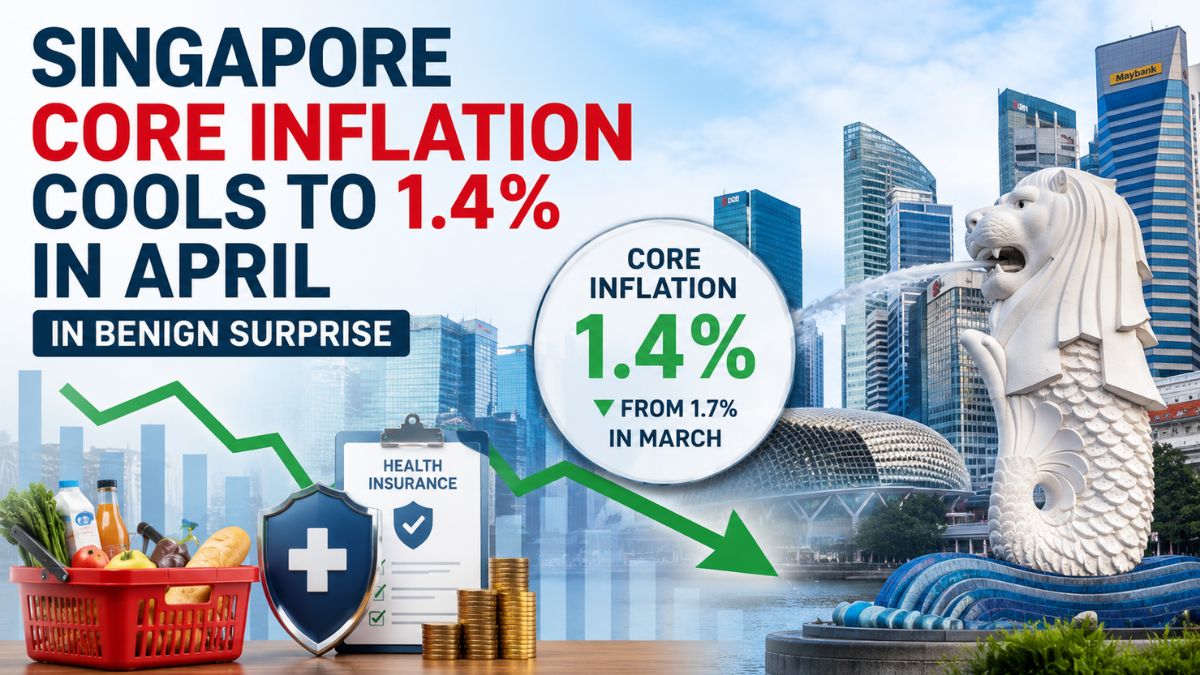
Singapore’s core inflation slowed more than expected in April 2026, giving households and businesses a bit of breathing room after months of cost pressure. Official data released by the Monetary Authority of Singapore and the Ministry of Trade and Industry showed that core inflation eased to 1.4% in April, down from 1.7% in March. Core inflation cools to 1.4% in April
Economists had expected inflation to rise slightly instead. The softer reading came as a surprise, mainly because healthcare-related insurance costs increased less sharply than anticipated.
What Helped Bring Inflation Down?
The biggest reason behind the slowdown was lower inflation in:
 Join WhatsApp
- Healthcare and insurance services
- Retail and consumer goods
- Telecommunication services
Services inflation dropped to 1.5% from 2.1% in March. Much of this was linked to lower health insurance premium increases after new Integrated Shield Plan riders were introduced from April 1.

Food inflation, however, stayed steady at 1.6%, while electricity and gas prices continued to decline, though at a slower pace.
Headline Inflation Remained Stable
Singapore’s overall headline inflation stayed unchanged at 1.8% in April. Rising transport and accommodation costs balanced out the decline in core inflation.
Private transport inflation climbed sharply to 8.1%, mainly because of higher petrol and car prices. Accommodation costs also edged higher due to rising rents.
S$850 GST Voucher 2026 Singapore:

MAS Still Warning About Future Price Risks
Even with the softer inflation data, Singapore authorities warned that global risks remain.
The MAS and MTI raised their full-year 2026 inflation forecast to 1.5%–2.5%, compared to the earlier estimate of 1%–2%.
Officials said rising energy prices and supply chain disruptions linked to tensions in the Middle East could eventually push imported costs higher across Singapore’s economy.
Here’s the concern:
- Higher oil and shipping costs could raise business expenses
- Imported goods may become more expensive
- Companies could eventually pass those costs to consumers
Will Singapore Tighten Monetary Policy Again?
Economists are divided.
Some major banks believe MAS may pause for now because inflation is cooling faster than expected. Others think inflation pressures could return later in the year.
Analysts at Maybank and UOB still expect further tightening in the Singapore dollar policy band later in 2026 if imported inflation continues rising.
Why This Matters for Singaporeans
For everyday Singaporeans, this slowdown is a welcome sign.

Lower inflation can help ease pressure on:
- Grocery bills
- Insurance costs
- Household spending
- Everyday services