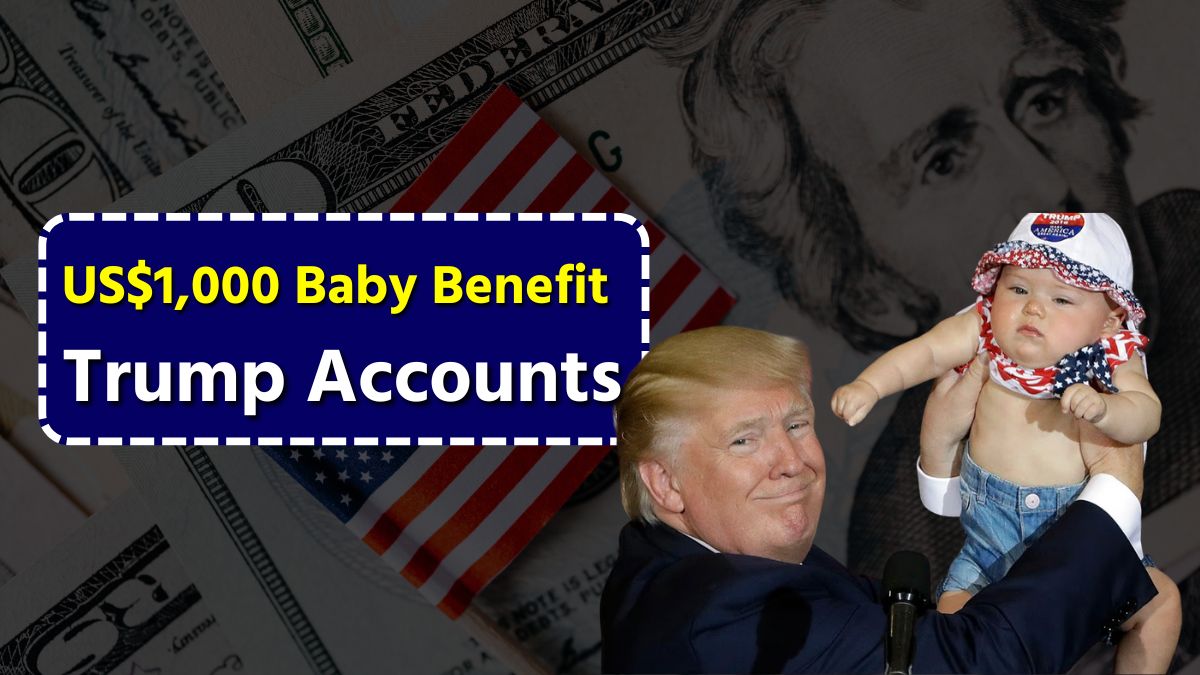
From 2025 to 2028, every baby born in the US gets a US$1,000 Trump Account. No application fee. No hoops to jump through. Just a newborn with a Social Security number.
Parents in Singapore with kids born in the US, or expats with plans to deliver there, are suddenly asking: “Eh, this one real or not? And how do we even claim it?”
Let’s break it down in a simple, no-drama way.
 Join WhatsApp
What Exactly Is a Trump Account?
Think of it as a starter IRA for children.
Not for diapers. Not for milk powder. It’s long-term money meant to grow quietly in the background.
The US government will:

- Open an account for every baby born 2025–2028
- Deposit US$1,000 (one-time)
- Allow parents, relatives, employers and charities to top up the account
The twist? Kids can’t touch any of the money until they turn 18.
Financial experts say it’s basically an early investment account designed to help future adults with education, home-buying, or retirement.
How Trump Accounts Work (In Simple Terms)
Who qualifies?
Any child born in the US between 2025 and 2028 with a Social Security Number.
That’s it. No income requirements. No residency rules.
How the money goes in
- Government gives US$1,000 once
- Parents + others may add up to US$5,000 a year
- Employers can contribute up to US$2,500 of that annual limit
- State/local governments or charities can contribute too
- Contributions can only start July 2026 onwards
Parents will likely need to tick a box on their US tax return to confirm they had a baby. The IRS is still finalising the process.
How the money grows
The law forces all Trump Account funds into low-cost stock index funds — basically passive investments tracking the S&P 500.

Which means the account grows based on the stock market’s long-term performance.
What Happens When the Child Turns 18?
This is where things get a bit confusing — the original plan was for kids to use the money in young adulthood, but the Senate reworked the structure.
Once the child turns 18:
- Early withdrawals (for education or first home) may be allowed without penalty
- Otherwise, it behaves like a traditional IRA
- Withdrawals become fully penalty-free only at age 59½
So yes, the account is meant for serious long-term savings, not short-term spending.
Should Parents Contribute More?
Here’s the million-dollar question — okay lah, US$5,000 a year sounds nice, but should you even top it up?

Experts are quite split on this.
Why some say it’s worth topping up
- Free US$1,000 is a good start
- Long-term compounding can be powerful
- Helpful for retirement or education much later
Why others say nah, maybe not
If the goal is education savings, analysts say 529 education savings plans offer better tax benefits and more flexible use.
One economist even called Trump Accounts “a giveaway with limited practical use.”
Still… free money is free money. Confirm worth collecting.
Quick Summary Table
| Item | Details |
|---|---|
| Government deposit | US$1,000 (one-time) |
| Eligible births | 2025–2028, must have SSN |
| Annual parent/others contribution limit | US$5,000 |
| Employer contribution limit | Up to US$2,500 (counts toward US$5,000 cap) |
| Investment type | Low-cost stock index funds |
| When can child access? | 18 years old (limited withdrawals), full access at 59½ |
| Purpose | Long-term savings for education, home, or retirement |
Frequently Asked Questions
1. Do Singaporean parents qualify if their baby is born in the US?
Yes — any baby born on US soil and issued a Social Security Number qualifies, regardless of the parents’ nationality.

2. Do parents need to apply for the US$1,000?
Most likely, yes. The IRS is expected to require parents to tick a declaration box on their tax form. Details will be finalised before July 2026.
3. Can I withdraw the US$1,000 before my child turns 18?
No. Withdrawals before age 18 are not allowed. After 18, only specific uses (like education or first home) may qualify without penalties.